

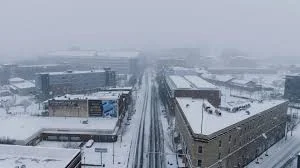
As winter storms become more unpredictable in 2026, accurate forecasting has never been more critical. From transportation disruptions to power outages and public safety risks, winter weather events demand precise and timely predictions. While weather apps have become the go-to tool for millions of users, professional meteorologists continue to outperform automated systems—especially when it comes to complex winter storm forecasts.
Weather apps rely heavily on automated models and algorithms that process large volumes of data quickly. These models are effective for general forecasts, such as temperature trends or light precipitation. However, winter storms are rarely simple. Snow accumulation, freezing rain, ice storms, and sudden temperature drops require nuanced interpretation that automated systems often fail to provide.
Professional meteorologists bring a human layer of expertise that weather apps simply cannot replicate. They analyze multiple forecast models simultaneously, understand their limitations, and adjust predictions based on regional geography and historical weather patterns. This expertise becomes especially valuable during winter storms, where small temperature variations can mean the difference between rain, snow, or dangerous ice.
In 2026, meteorologists are leveraging advanced tools such as AI-assisted modeling, high-resolution satellite imagery, and real-time atmospheric data. However, unlike weather apps, they do not rely blindly on these technologies. Instead, they use them as decision-support tools while applying scientific judgment and local knowledge. This hybrid approach significantly improves forecast accuracy during severe winter events.
One major weakness of weather apps is their inability to communicate uncertainty effectively. Apps typically present a single forecast number—such as snowfall totals—without explaining confidence levels or alternative scenarios. Meteorologists, on the other hand, clearly communicate risks, probabilities, and potential changes. This helps governments, businesses, and individuals make better-informed decisions.
Another advantage meteorologists hold is their understanding of microclimates. Urban heat islands, elevation changes, proximity to water bodies, and land use all influence winter weather outcomes. Weather apps often generalize forecasts over wide areas, missing these localized effects. Meteorologists tailor forecasts to specific regions, making them far more reliable during winter storms.
Public trust also plays a significant role. During major winter storms, people tend to turn to trusted meteorologists on television, radio, and digital platforms rather than relying solely on apps. These professionals provide real-time updates, answer public questions, and adjust forecasts as conditions evolve—something static app notifications struggle to do effectively.
For industries such as aviation, logistics, emergency management, and energy, relying on meteorologist-driven forecasts is essential. Accurate winter storm predictions can prevent costly delays, protect infrastructure, and save lives. In 2026, many organizations are prioritizing expert-led weather services over consumer-grade weather apps for this very reason.
This growing reliance on professional forecasting highlights the importance of understanding the limitations of automated tools. While weather apps are convenient and accessible, they should be viewed as supplementary resources—not replacements for expert analysis—especially during high-impact winter weather events.
For readers seeking deeper insights into weather prediction and climate trends, advanced winter weather forecasting insights provide a comprehensive look at how expert analysis continues to shape safer outcomes during extreme winter conditions.
In conclusion, winter storm forecasting in 2026 is more complex than ever. While weather apps offer speed and convenience, meteorologists outperform them through experience, critical thinking, and localized expertise. As winter storms grow in intensity and unpredictability, trusting human expertise remains the smartest choice for accurate and reliable weather forecasting.
