

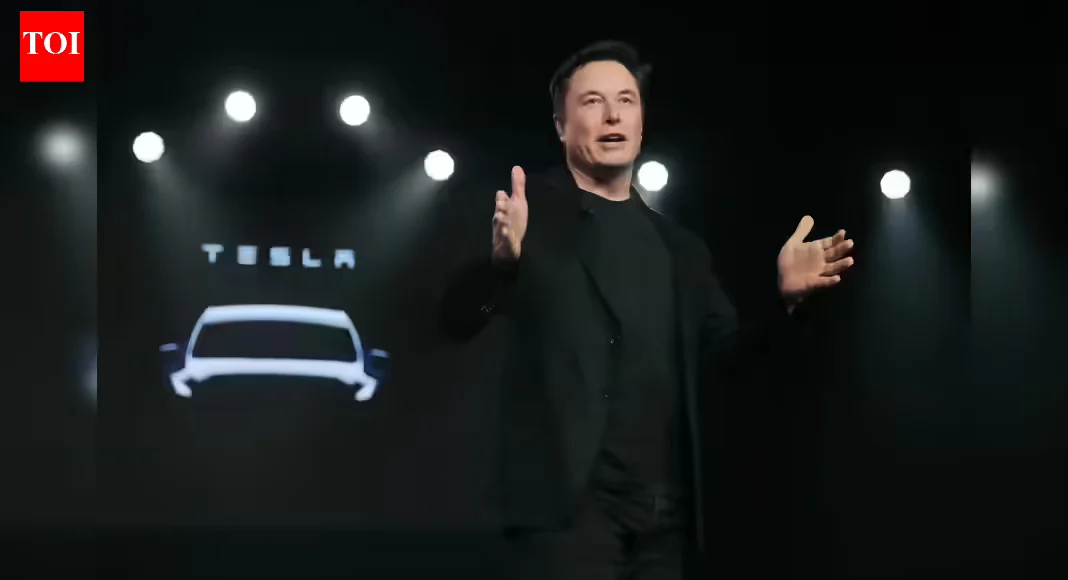
Elon Musk is taking Tesla’s artificial intelligence efforts to the next level. The company is now focusing heavily on in-house AI chip design and recruiting top-tier engineers with highly competitive salaries. This move is part of Tesla’s long-term strategy to strengthen its autonomous driving and AI capabilities.
Tesla’s AI chips power self-driving software and energy-efficient computation for vehicles. By taking control of design in-house, Tesla aims to reduce reliance on third-party suppliers while improving performance and safety.
Tesla’s Push for In-House AI Chips
Tesla has historically relied on external chip providers. However, the increasing demands of autonomous driving software have made custom AI chips essential. By designing chips internally, Tesla can optimize performance for neural networks and real-time processing.
Elon Musk has been personally involved in AI chip design discussions. Reports indicate that he actively reviews architecture, efficiency, and integration with Tesla’s full stack. This hands-on approach ensures that Tesla’s AI remains cutting-edge and closely aligned with company goals.
High-Paying Roles to Attract Top Talent
To support this initiative, Tesla is offering high-paying roles for engineers specializing in chip design, AI algorithms, and system architecture. These positions are aimed at attracting top talent from global tech companies and semiconductor leaders.
Tesla’s approach mirrors broader trends in the industry. Companies investing in AI hardware increasingly compete to secure the best engineers. Competitive compensation, research freedom, and innovative projects are key incentives for recruiting top talent.
Why Custom AI Chips Matter for Tesla
Custom AI chips allow Tesla to optimize hardware for specific tasks, such as autonomous navigation, real-time sensor processing, and energy efficiency. Tesla AI chip design initiative. Off-the-shelf chips may not provide the same level of performance, flexibility, or cost efficiency.
According to industry analysts, Tesla’s in-house chips are critical for scaling its Full Self-Driving (FSD) software. Custom designs also reduce latency, improve reliability, and allow tighter integration with vehicle systems. These advancements are often discussed in next-generation automotive AI research, where hardware innovation drives software capabilities.
Tesla’s Competitive Advantage
By controlling AI chip design, Tesla positions itself ahead of competitors in the electric vehicle market. Many rivals rely on third-party chips, which can limit performance and innovation.
Tesla’s AI chip revolution also strengthens the company’s software ecosystem. Engineers can design systems that fully exploit hardware capabilities, improving vehicle safety, responsiveness, and autonomous driving features. This holistic approach to hardware and software integration is reshaping the EV industry.
Broader Implications for AI and Semiconductor Markets
Tesla’s investment in in-house AI chips signals a broader trend in the semiconductor and AI markets. Tech companies increasingly see custom chips as essential for maintaining competitive advantage, particularly in autonomous vehicles, robotics, and AI-driven services.
This shift has implications for suppliers, competitors, and investors. Companies that can’t innovate quickly may lose market share. Meanwhile, Tesla’s approach highlights the growing importance of vertical integration in high-tech industries. These developments are explored in advanced semiconductor engineering insights, emphasizing the strategic value of proprietary chip design.
Impact on Tesla Employees and the Industry
Tesla’s focus on AI chip design creates exciting opportunities for engineers. High-paying roles, cutting-edge projects, and direct involvement in product innovation make Tesla an attractive workplace for top talent.
Industry observers suggest that Tesla’s approach will push competitors to rethink talent recruitment, compensation, and in-house innovation strategies. In turn, this may accelerate the pace of AI and autonomous vehicle development across the sector.
Final Thought
Elon Musk’s hands-on approach to Tesla’s AI chip design underscores the company’s commitment to innovation and vertical integration. By recruiting top engineers and designing custom hardware, Tesla is positioning itself for long-term leadership in autonomous vehicles and AI-driven technologies.
The AI chip revolution at Tesla is more than a hardware initiative; it is a strategic move that combines engineering talent, software expertise, and visionary leadership. For the automotive and AI industries, Tesla’s bold strategy sets a new benchmark in high-performance computing and innovation.
